
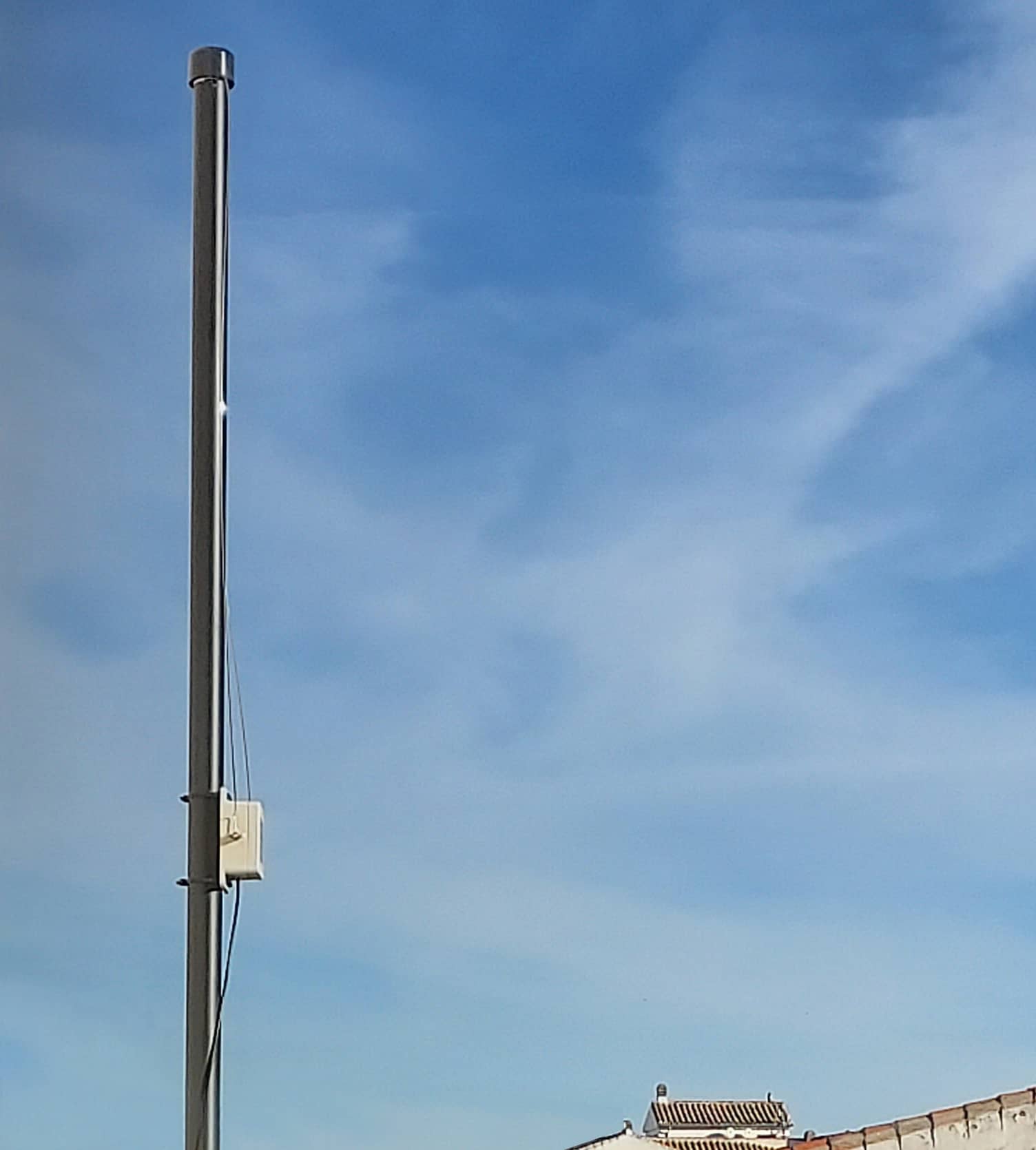
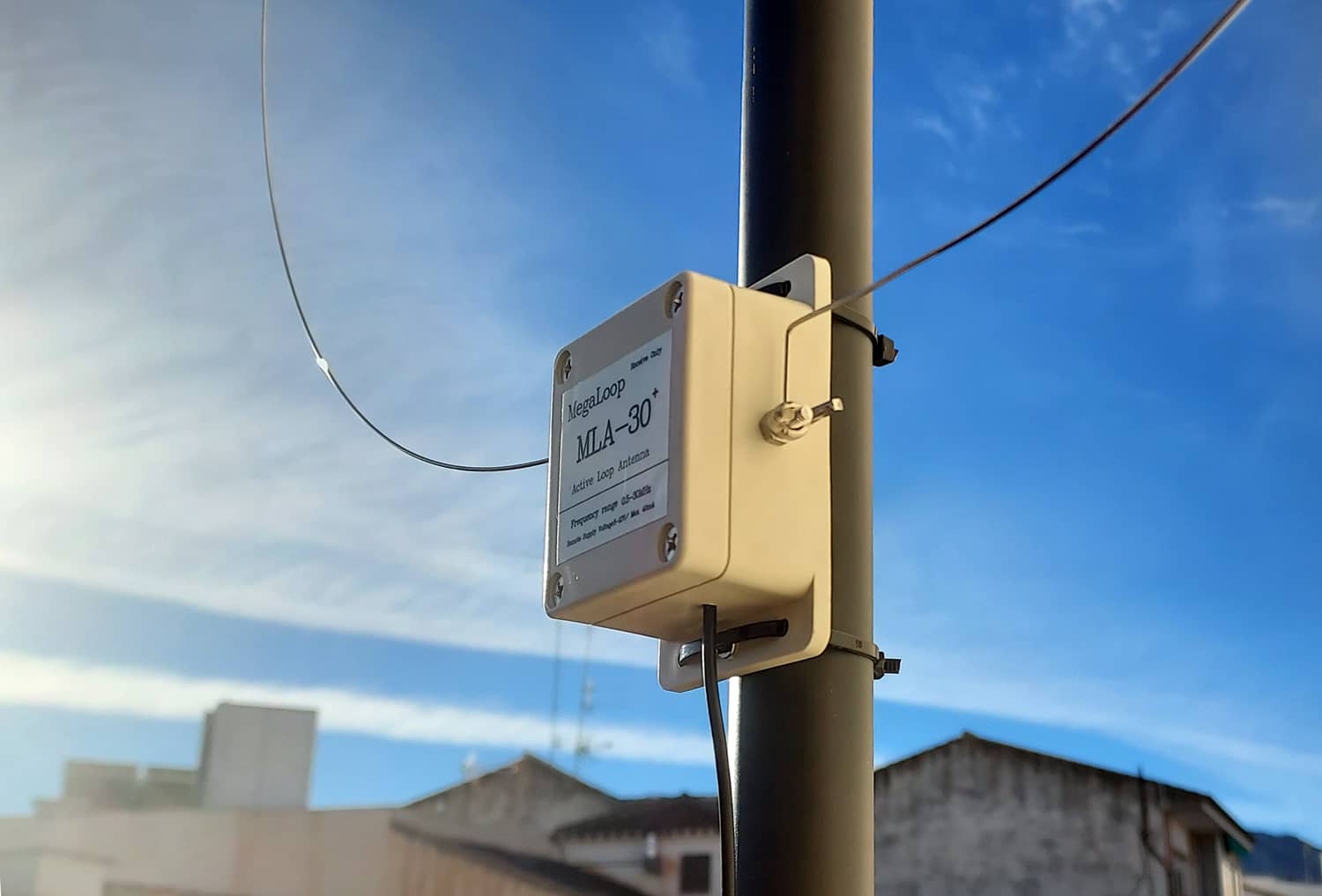
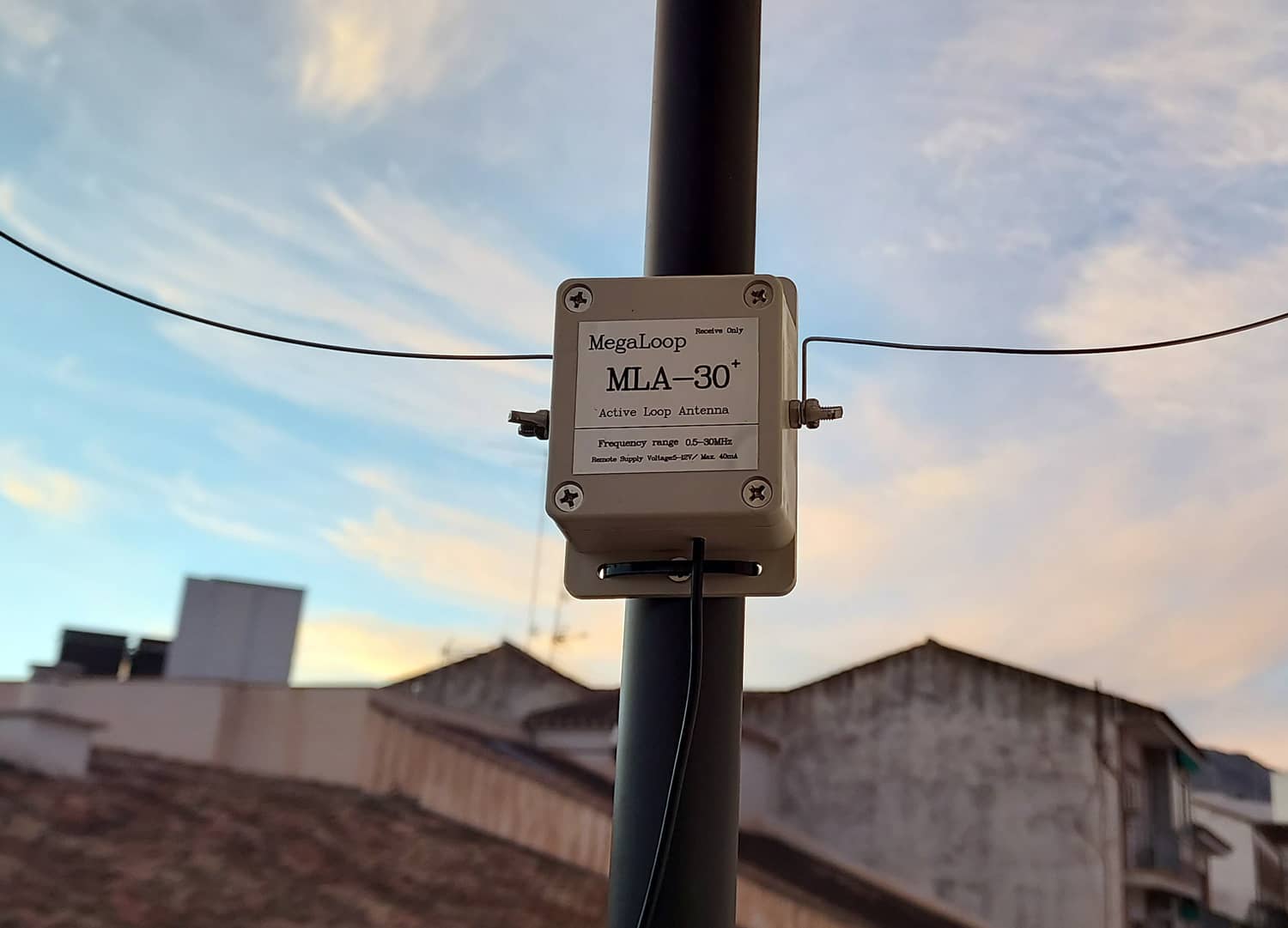
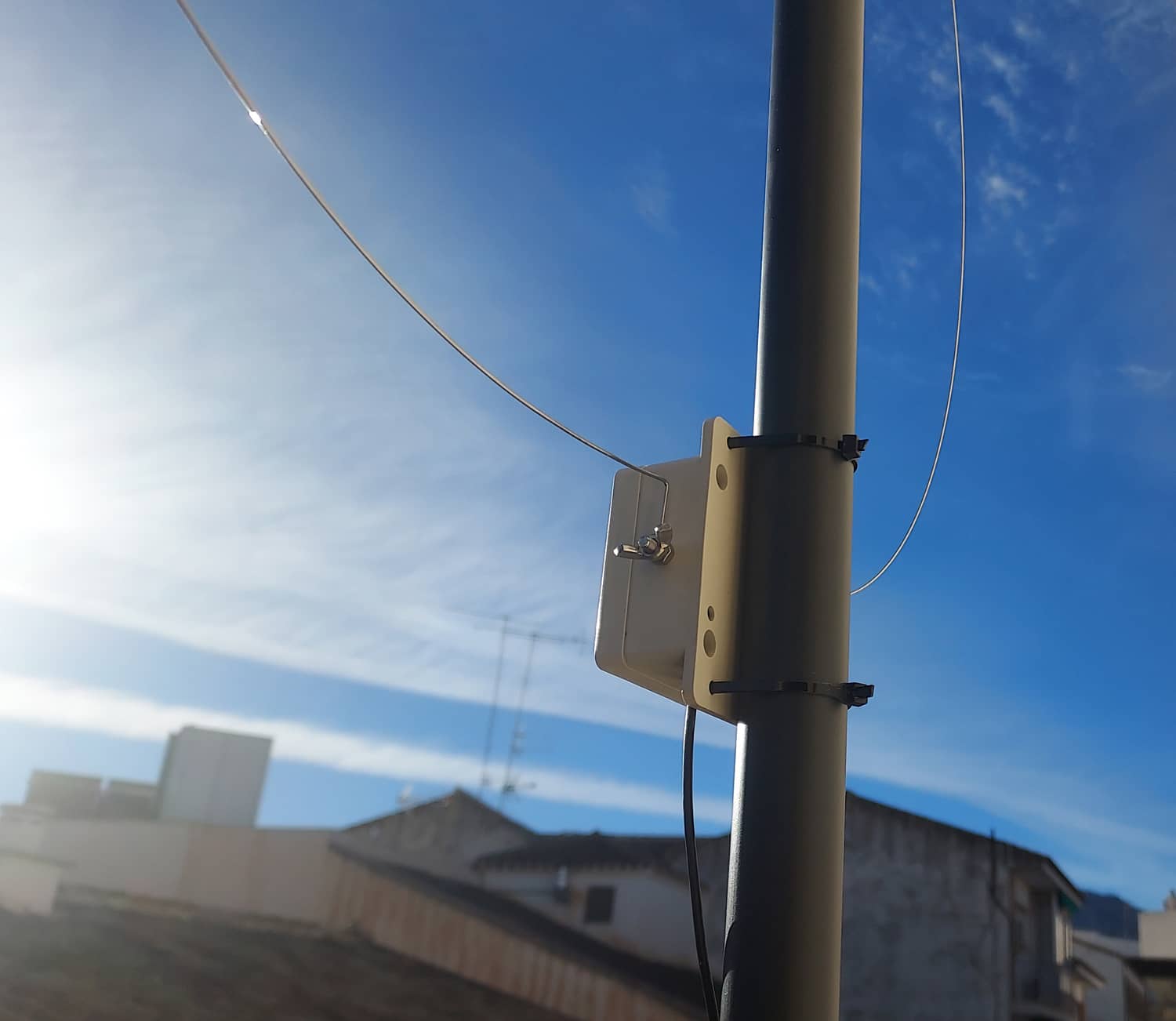
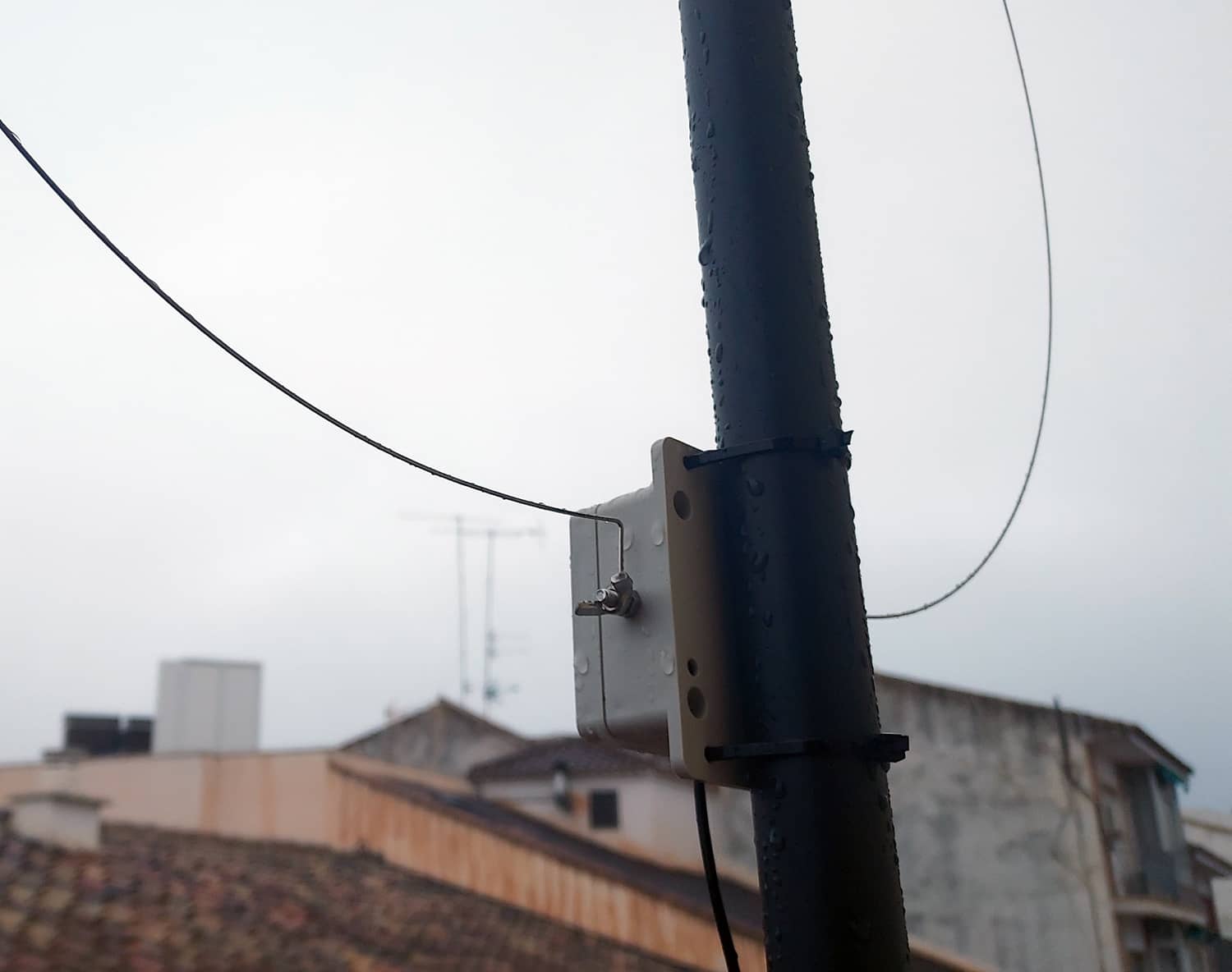
The rains came, always scarce and necessary, and it was wet for several days. No problems.
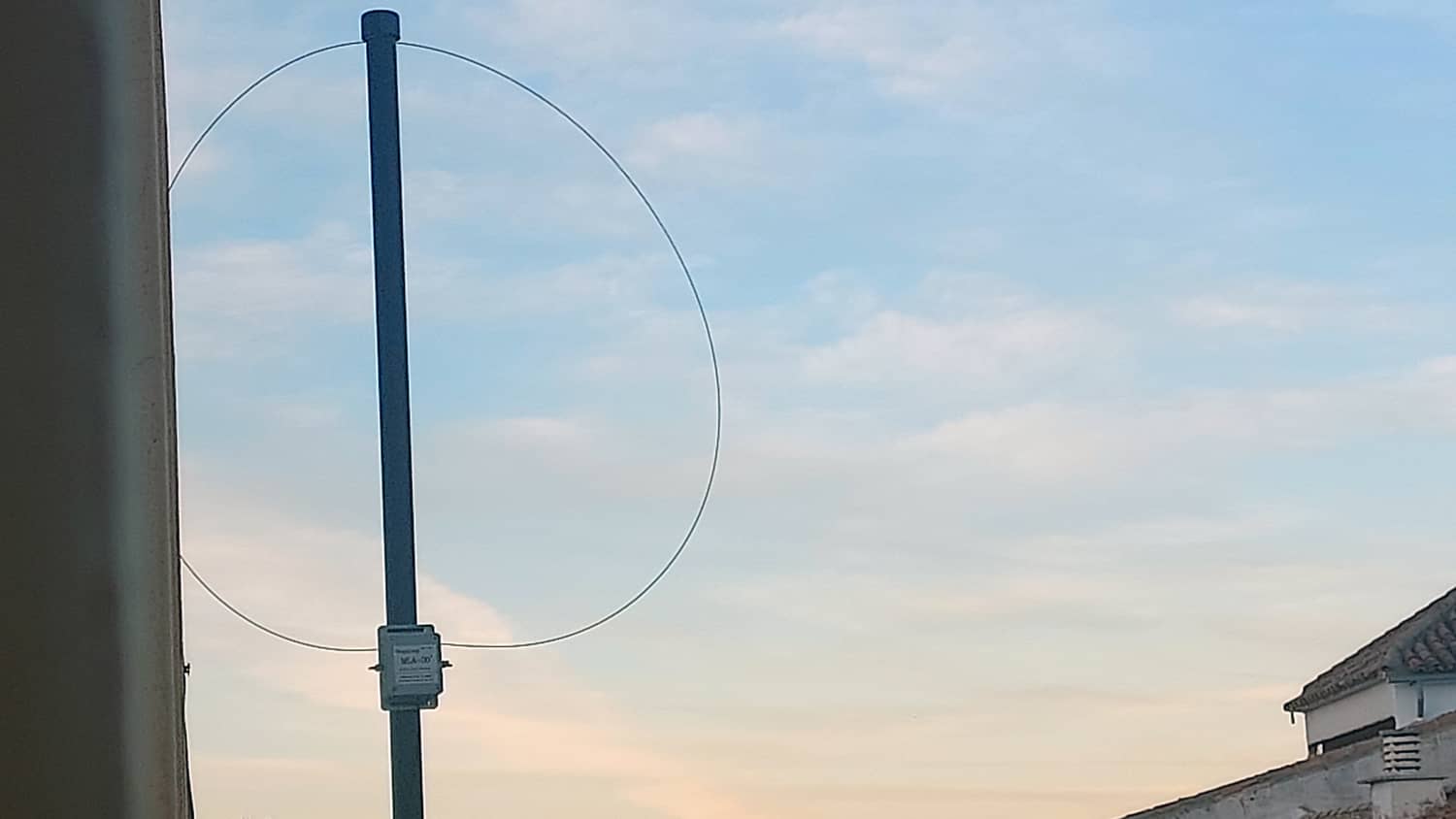
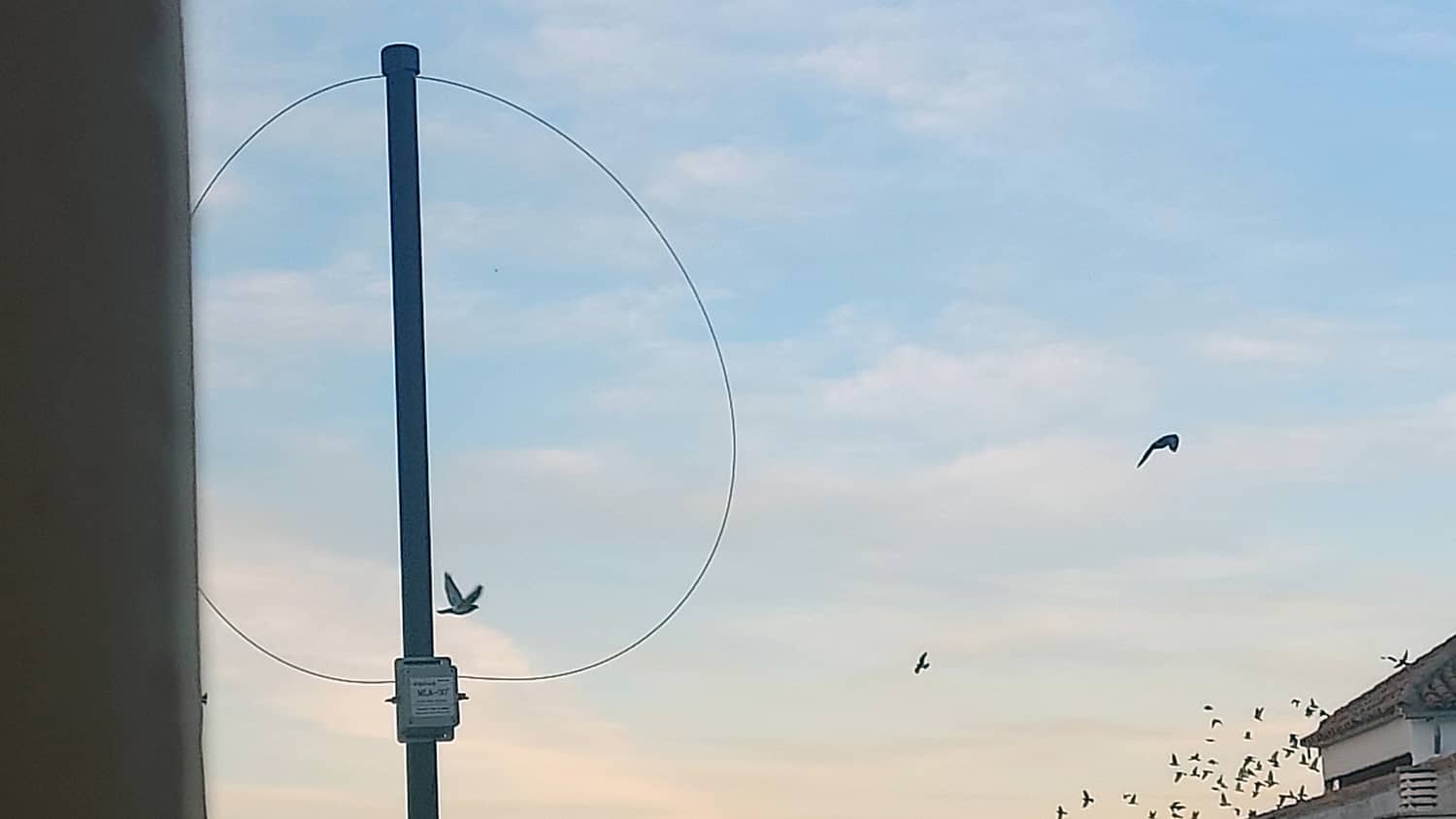
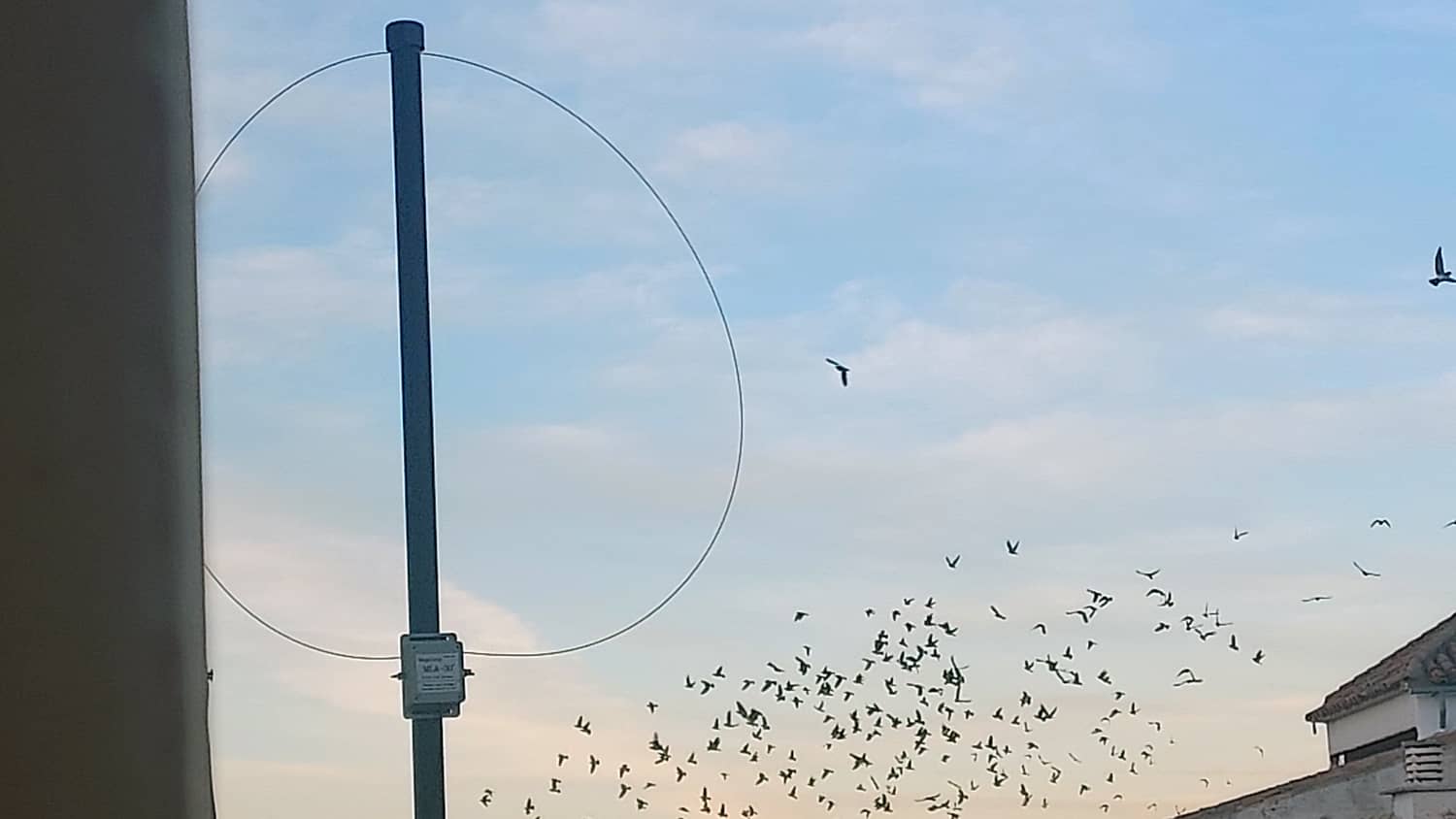
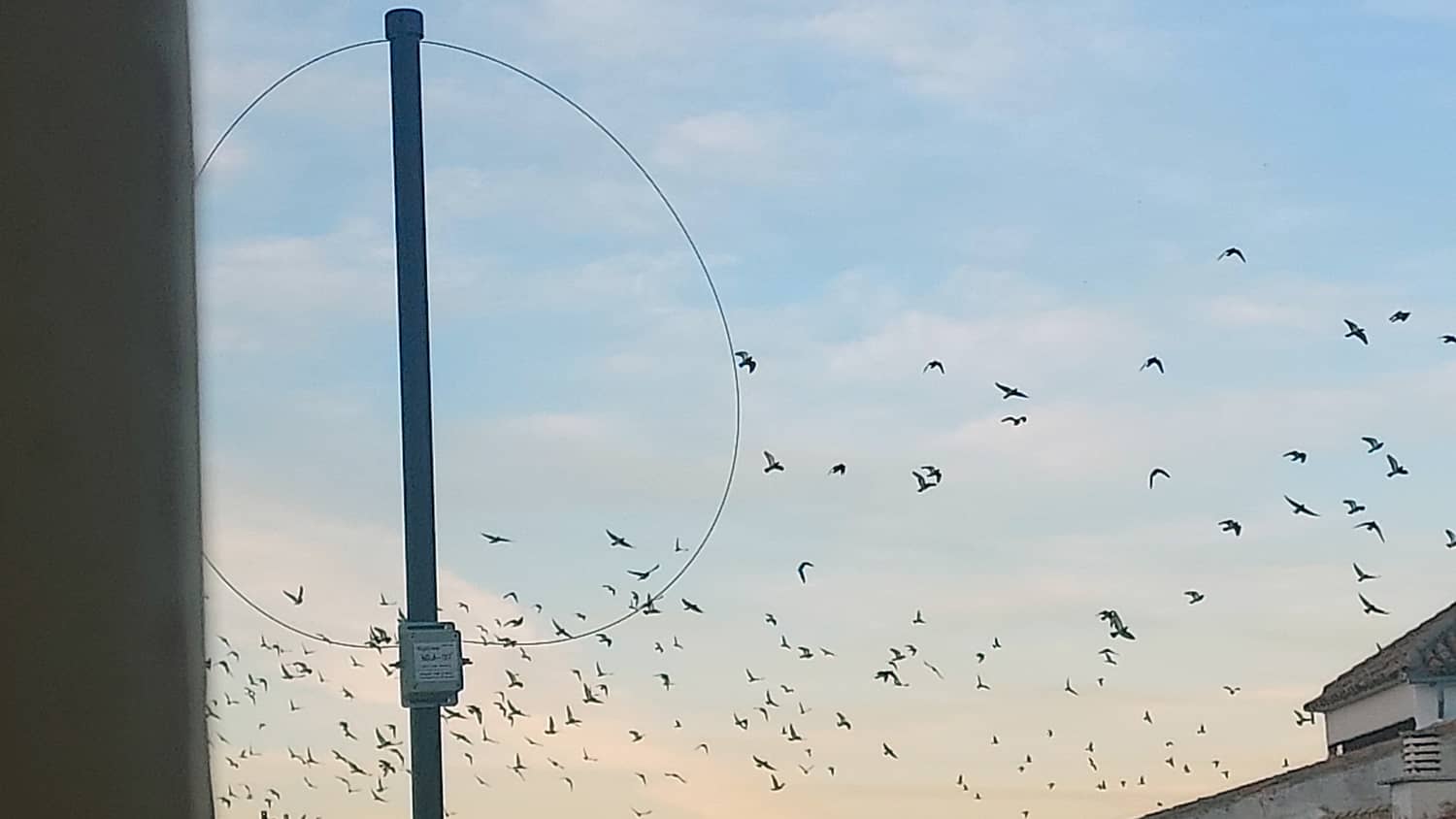
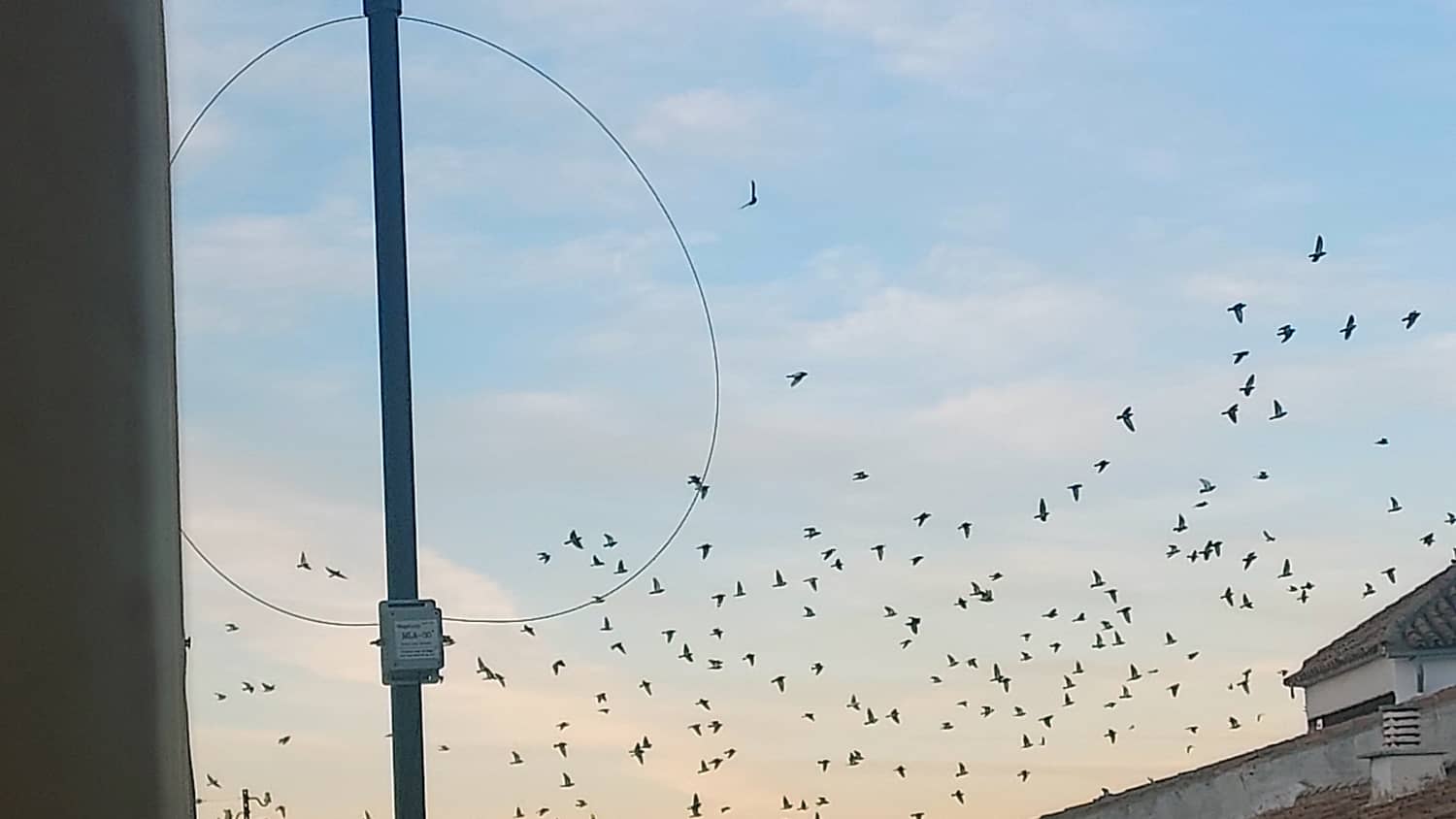
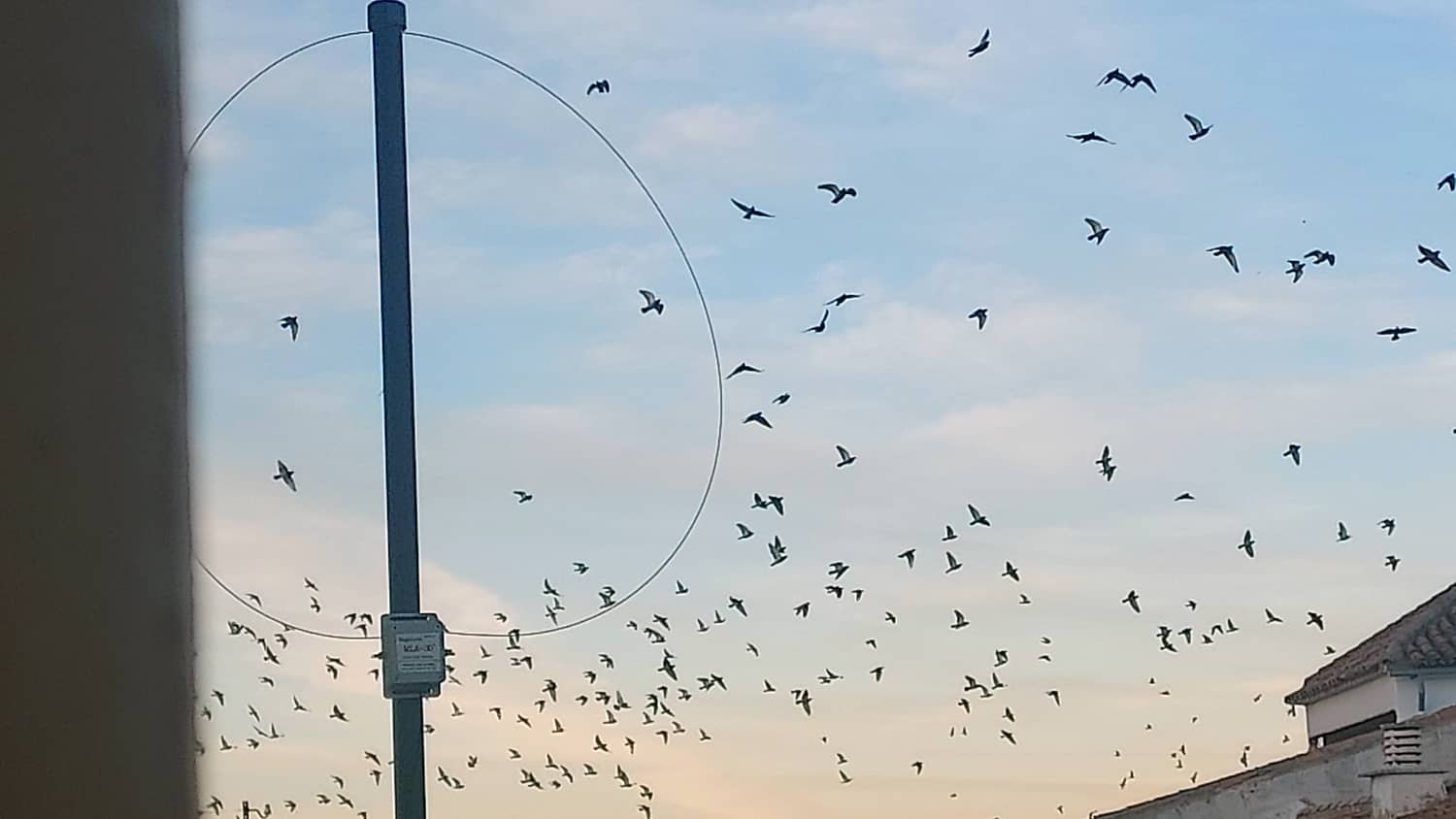
And here is a series, just for fun, because pigeons and birds came out.
Strengths and weaknesses
The antenna is directional (not directive), i.e. you cannot point it at another continent and listen to it as you would with a multi-element directive, but you can rotate it to reduce interference from nearby electronics and other noise.
It is much cheaper, handier, smaller and more discreet than other antennas of this type, making it ideal for installation in confined spaces or where there is no access to the roof, and you can always mount it on a temporary stand and store it after use.
Also, as it takes up very little space when disassembled, you can take it with you on an excursion to hang it from a tree, a fence or any other natural or improvised mast.
It is an antenna, it does not work miracles, but there is no denying that it has a surprising performance in bad conditions for a very low price if we compare it with other antennas of this type, ten times more expensive, such as the Wellbroock ALA1530LNP, mythical antenna that stopped being manufactured at the end of April 2023 as the company closed due to retirement.
But it is not all virtues.
Its amplification is a double-edged sword, on the one hand the reception boost is noticeable, but on the other hand it is accompanied by a lot of noise. Curiously, the reception quality can be improved by lowering the gain and playing with the filters.
Another negative point is the cable, which is not only fixed, but also very thin and prone to noise. With a more shielded and thicker one, like an RG213, this antenna receives much better. Fortunately, if you are not too clumsy, you can always modify it and add, for example, a BNC connector, so you can put a longer run of cable in it without having to resort to splicing connectors, with the consequent loss of reception.
And if you are an expert handyman, you can always make other advanced modifications, such as adding a more powerful ring.
One improvement you can try is to turn up the potentiometer inside the box (making sure to reseal the box if you are leaving it outside) which will increase its gain and improve reception but also increase the background noise level. By playing with the gain, you can try to achieve the optimum signal-to-noise ratio.
It is important to know that turning the potentiometer clockwise decreases the gain and counterclockwise increases it.
Listening, some recordings
As soon as I switch the receiver on, I get an idea of what I'm going to hear from the location and orientation. I mainly receive stations from the northwest. Thus, the transmissions between operators from Jaén, Zaragoza, Valencia, Catalunya and from France, Italy, United Kingdom, Germany, Poland, Bulgaria, Serbia, Croatia, etc., but also from Russia, predominate. Although, depending on the propagation, the signal has also arrived from some stations further south.
A couple of minutes of R7ET, Sergej, from Cherkesk, Russia on 7131 MHz
The antenna has a very good shortwave performance and every night you can listen to different international stations with Spanish broadcasts in different time slots.
It also performs very well on 40 and 20 metres. I have even been able to listen to some stations from different continents on 80 metres, as well as on 10 and 11 metres (CB), where I have been surprised to hear many national and central European stations, but especially from Eastern Europe, in quite decent conditions.
Almost every night I hear Blagomir, YU1XA, from Serbia, which I'm sure comes with good antennas and not a few watts, loud and clear on 40 meters at some point.
Here are a few listens with the antenna just mounted and with poor propagation conditions (the recording does not do justice to the real audio quality with filters and headphones).
Radio China International, always very strong at night, like Radio Romania International, TRT Turkey and others.
The mythical diexist henhouse of the popularly known "triple 5", the call-in channel on 27.555 USB, where it is rare the day that there is not some brawl.
Station EA5FHC (Mislata, Valencia) in competition on 7199 MHz
On 11.253MHz USB there is a Volmet (French acronym for vol, "flight", and météo, "meteorology") operated by the British Royal Air Force at St. Eval on the north coast of Cornwall, broadcasting 24 hours, callsign "MKL" and also known locally as "Military One".
It broadcasts 24-hour voice weather data such as wind speed, temperature, etc. so that aircraft in flight can obtain this information.
Three minutes of RAF VOLMET (UK) on 11.253 MHz USB
is eavesdropping legal?
Yes, as far as I know, or as far as I remember, no licence or legal process is required to be a listener, as long as you are not using a transceiver, i.e. equipment capable of transmitting on those bands that require authorisation and a licence.
Now, if you don't have any radio licence, but you want to practice diexing and be able to send QSL cards and reception reports for which you need a SWL callsign, you can apply for one at swarl.org and you get a kind of "certificate" like this one with a classic diploma style.
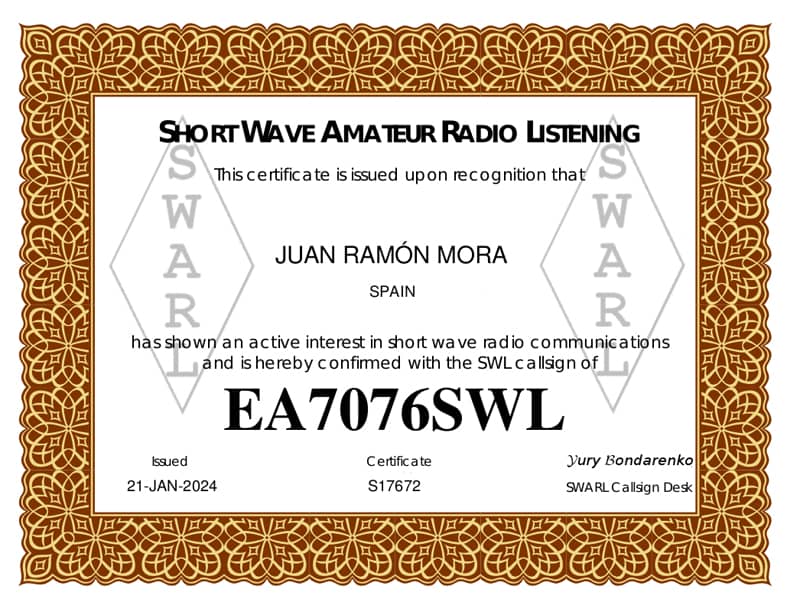
This callsign they give you will become part of their membership list and has no validity other than to certify that you have joined this international group of listeners because you are interested in radio stuff.
You can also do the same and apply for a WSL callsign in its Spanish version from FEDI-EA, Federación Digital EA.





Other reviewers claim just the opposite of what's described here; turning the potentiometer inside the box clockwise increases the gain (and noise floor)...
I'm not going to fiddle with it, so have no idea who's right.
Yes, finally I haven't touched the potentiometer either, and I don't plan to do so because I don't want to waterproof the box with the risk of water or humidity getting in.
The truth is that, although I have quite a lot of noise because of the thousand devices around me, the balance between noise and signal is not bad at all.
I'm already using it with the Beas Tee from the V4 and it's a relief to get rid of the power bank and two cables :P
Once again I thank you very much for the comment, I probably would have spent the rest of my life using the Bias Tee on the antenna if no one had warned me.
You do not need the little Bias Tee box that came with the MLA-30+ if you're using the RTL-SDR Blog version 4 dongle, as this has its own Bias Tee built-in. Just connect the long cable emanating from the pre-amplifier box at the antenna and connect it directly to the SMA on the SDR. Then, to activate its built-in Bias Tee, just check the Offset Tuning option in SDR#. If it is active a tiny red LED besides the SMA should light up. This simplifies the setup quite a bit. You can activate the Bias Tee also from the command prompt in Windows, using the 'rtl_biast.exe' executable.
Thank you very much for your comment, Hans
What a great surprise (and joy) you give me.
I didn't know that, and I tried to read as much as possible before buying the antenna.
I'm going to try it out right now.