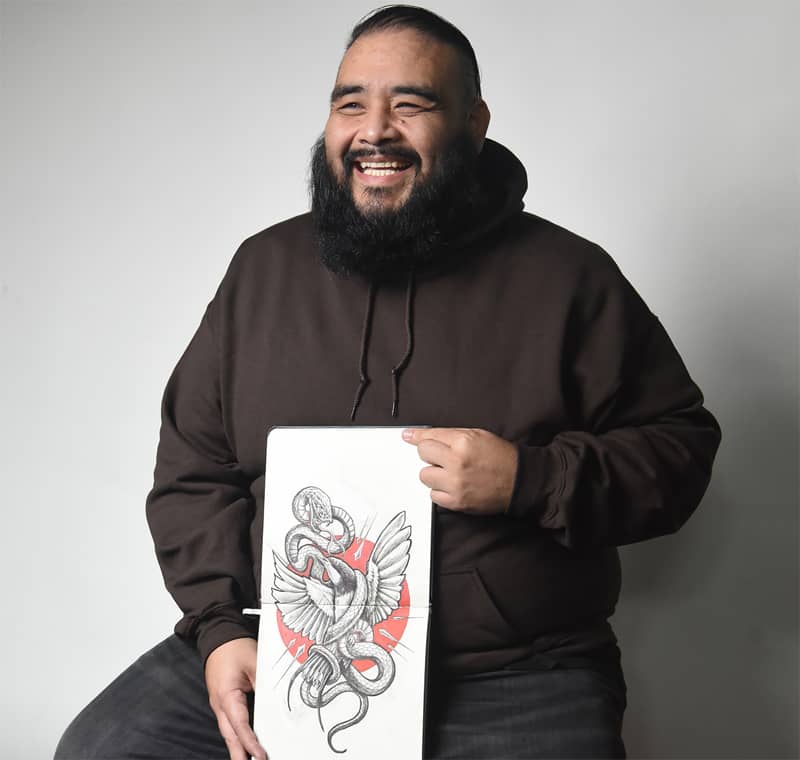
Daniel "Des" Sánchez Estrada is a tattoo artist who has been wrongfully sentenced to 30 years in prison in the United States for transporting a box of anarchist fanzines in his car. “Des” is currently in prison because the Trump administration claims that printing, reading or possessing certain literature constitutes evidence of a crime of supporting terrorism.
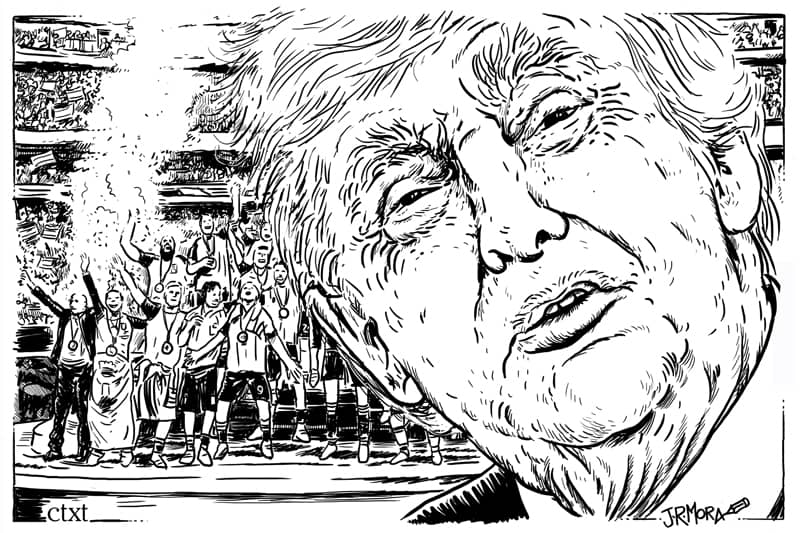
For many, this conviction represents a federal attack on the freedom to dissent and a serious threat to freedom of expression. This is whatthe ‘land of opportunity’ has become. And then they go on about how we live in a ‘dictatorship’ here.
According to the account of the trial available on “Free Des”, a support platform for the cartoonist that is raising funds for his defence, on 23 June, Judge Reed O’Connor, appointed by George W. Bush to the United States District Court for the Northern District of Texas, sentenced the immigrant artist Daniel “Des” Sánchez Estrada to 30 years in federal prison for possessing and transporting a box of fanzines — political pamphlets.
His case, informally known as‘Prairieland’, has been met with extreme scepticism by civil rights organisations, including the Foundation for Press Freedom and the National Bar Association, and is one of a growing number of cases in which federal prosecutors cite the possession of First Amendment-protected material as evidence of offences relating to support for terrorism.
Speaking in court before the sentence was handed down, Sánchez Estrada stated: ‘I have worked very hard every day in this country, and I believe in human rights and in helping those in need. I donate money and works of art to help animals and other people… I am a father, a husband, a teacher, a poet… I am many things, Your Honour, but I am not a terrorist.”
In handing down the judgement against Sánchez Estrada, Judge O’Connor dismissed the motions for acquittal or a retrial filed by Sánchez Estrada’s court-appointed lawyer, Christopher J. Weinbel, which highlighted that the prosecution had failed to identify to what extent the documentation in question constituted evidence or to demonstrate that Sánchez Estrada had intended to conceal it. In the rejected motion, Weinbel clearly stated that the prosecutors ‘relied exclusively on unfounded inferences and speculation, which the Fifth Circuit (a federal court of appeal in the United States) – one of the 13 federal courts of appeal in the US judicial system – systematically rejects as evidence. The Government’s own statements reveal that the subject matter of the offence was unknown, which led the jury to speculate as to what constituted the alleged evidence.”
In response to the judgement handed down against Sánchez Estrada, lawyer Moira Meltzer-Cohen, who represents individuals detained in connection with activities protected by the First Amendment, stated: “This entire legal process has been designed to test the state’s ability to stifle dissent.” But the way forward is not silence, but courageous solidarity with those who are being punished for their protected beliefs, associations and activities. And however devastating this may have been for those affected, I firmly believe that their rights will be upheld in the post-conviction proceedings.”
Seven other co-defendants in the Prairieland case also received sentences ranging from 50 to 100 years’ imprisonment in a federal prison. One of them was Sánchez Estrada’s wife, Maricela Rueda, who received a staggering 70-year sentence, which exacerbated her family’s situation and left her teenage daughter in the care of relatives. According to observers at the trial, Judge O’Conner acknowledged the court’s political agenda by handing down maximum sentences to “send a message to anyone who shares a similar ideology”.
Background
Sánchez Estrada, a 39-year-old artist, was found guilty on 13 March 2026, along with eight other people, all of whom have now been sentenced to up to 70 years in prison, for taking part in a protest against ICE at the controversial “Prairieland” ICE detention centre in Alvarado.
Under the terms of“Presidential Memorandum on National Security No. 7”, issued on 25 September following the murder of the Christian nationalist influencer Charlie Kirk and which classifies anti-fascism and opposition to capitalism as “domestic terrorism”, Sánchez Estrada was charged at federal level with“wilful concealment of a document or record” for moving a box of fanzines the day after the protest. Although he was not present at the protest nor was he aware of it, prosecutors argued that the contents of the leaflets constituted evidence of the defendants’ material support for terrorism, and scandalously alleged that the decision to move the box was a conspiracy between Sánchez Estrada and his wife.
Following his arrest, Sánchez Estrada, a former DACA beneficiary and current holder of a residence permit, was targeted by ICE; his personal details were disclosed by the US Department of Homeland Security (DHS); and he was threatened with deportation. He has received support from numerous advocacy organisations, including the National Lawyers Guild, the Abolitionist Law Centre, the Immigration Legal Resource Centre, the Texas Civil Rights Project, Houston Leads and the Texas Prison Project.
As Seth Stern, director of advocacy at the Freedom of the Press Foundation, has stated:“Being guilty of possessing printed material is a concept that is fundamentally incompatible with a free society. We do not need a constitutional right to publish (or possess) only what the Government likes, and the ‘anti-government’ material found in Sánchez’s fanzine box is precisely what the First Amendment protects.”
What does ‘Des’ stand for?
The “Antifa material” that Des was carrying in the box included fanzines, illustrations, stickers and tattoo design sheets criticising ICE and the police. The creation, distribution or transport of any of these items is not illegal.

Photographs of some of the fanzines for which Daniel Sánchez is being charged, as included in the criminal complaint filed in July 2025. See PDF.

Image posted on the US Immigration and Customs Enforcement’s X account on 10 July 2025.
"Des" was accused of doing the same thing as Waltine Nauta and Carlos de Oliveira when they allegedly moved classified documents on Trump’s orders, whilst he was facing trial for hoarding classified documents. Had Trump’s Department of Justice not dropped the case against Nauta and de Oliveira, and had they been found guilty, they would likely have faced a 20-year sentence under standard sentencing guidelines. Twenty years for moving classified documents. Des, however, has received a 30-year prison sentence for some fanzines and tattoo designs.
Related links: